Industrial Scales for Accurate and Reliable Weighing
Industrial scales are heavy-duty weighing instruments that continue to be accurate even under constant use, in conditions no retail scale could survive. Vibration, dust, moisture, and daily wear take a toll on ordinary equipment, but industrial units keep reading true through all of it.
That accuracy is essential in commercial operations. A miscalibrated scale or a few kilograms lost on a freight dock can accumulate into a significant total. For any Australian business selling goods by weight, accuracy becomes a legal obligation.
Why it's regulated: Australia's trade measurement transactions are worth more than $750 billion a year, and the National Measurement Institute (NMI) oversees the scales behind that figure. Under the National Measurement Act 1960, any scale used to set a price by weight needs a valid pattern approval and periodic verification.
What Are Industrial Scales Used For?
Industrial scales earn their keep in the parts of a business where weight decides the next move.
Industrial Weighing in Manufacturing
On the production line, scales weigh raw materials before batching starts and confirm finished product weights before goods leave the floor. Mid-run checks on individual components catch drift early, before a bad batch reaches quality control.
Industrial Weighing in Warehousing & Logistics
Pallet scales log incoming stock against the delivery docket and outgoing pallets against the pick slip. That single step catches short deliveries and overloaded trucks before either one becomes an expensive phone call. Stock counts stay accurate because the weight, not a manual tally, drives the number.
Industrial Weighing in Food & Processing
Portion control and batch consistency depend on scales that survive a washdown and keep reading true straight after. Hygiene rules leave little room for guesswork, so processors lean on stainless steel, IP-rated equipment for both portioning and the checkweighing step that follows it.
How to Choose the Right Industrial Scale
Five factors decide whether an industrial scale earns its keep on the floor or gets replaced within a year.
| Consideration |
What to check |
| Maximum capacity |
Rate the scale above the heaviest load it will see — a loaded pallet, a full trolley, a stacked bin. Load cells wear out fast under repeated overloading. |
| Platform size |
The load needs to sit fully on the platform, or the reading drifts. Match the deck to standard Australian pallet dimensions where pallets are part of the job. |
| Readability and accuracy |
Readability is the smallest change the display shows, such as 0.1kg. Accuracy is how close that number sits to the true weight. Lab work needs fine readability; bulk weighing needs dependable accuracy more than fine detail. |
| Working environment |
Water, dust, chemicals, and regular washdowns wear down a scale fast. IP65 or IP67 ratings and stainless steel construction hold up where a standard unit fails. |
| Connectivity |
RS-232, USB, Ethernet, and Wi-Fi outputs connect a scale to a printer or a warehouse management system (WMS), cutting manual data entry out of the process. |
Industrial Scales from Leading Weighing Equipment Brands
Able Scale stocks industrial scales from five established names in the weighing industry:
- A&D
- Ishida
- Nuweigh
- Ohaus
- Rinstrum
Each brand covers a different part of the job.
A&D and Ishida bring trade-approved bench and platform ranges suited to Australian compliance requirements.
Ohaus spans compact bench units through to heavy industrial platforms.
Nuweigh fills the gap with rugged, cost-effective options for parcel and freight weighing, and Rinstrum's indicators sit at the centre of custom load-cell setups.
Buying from an established name matters less for the badge on the display and more for the parts supply and local service that follow the sale.
Why Choose Able Scale for Industrial Scales?
Able Scale has weighed Australian businesses since 1970, when founder Alan Sinclair started the operation as a scale hire business in Thomastown, Melbourne. The team today brings over 100 years of combined experience in weighing equipment sales, service and hire.
That experience shows up in the range: multiple scale types and capacities, with direct access to established weighing brands from A&D through to Rinstrum. The team helps narrow that range down to the right scale for the job, then backs it with local sales support, technical advice, and repair and servicing capabilities throughout Victoria and beyond. An ISO9001-certified system underpins the operation, and the catalogue covers manufacturing, warehousing, and food processing, with plenty more sectors besides.
Talk to a weighing specialist
FAQs
1. What are industrial scales used for?
Industrial scales are used where getting the weight wrong costs you something—batching raw materials, checking pallets in and out, counting stock, or confirming a shipment before it goes out the door. Anywhere weight decides a price or a recipe, an industrial scale can do the work.
2. What is the difference between an industrial scale and a commercial scale?
Think of it as toughness versus everyday convenience. Industrial scales are made to take a beating in factories and warehouses, day in and day out. Commercial scales handle lighter jobs in a shop or a café. Industrial models generally carry more weight, survive harsher conditions, and offer more ways to connect to other systems.
3. What are the common types of industrial scales?
Bench scales suit precise, smaller items. Platform and floor scales take pallets and bulk loads. Pallet scales sit low enough for a forklift to roll straight over. Counting scales speed up stocktakes, and checkweighers catch anything off-spec on the line.
4. What type of industrial scale is best for pallet weighing?
A low-profile floor or pallet scale is usually the answer — forklifts and pallet jacks can drive straight onto the platform without extra manoeuvring. Most sit somewhere between 1,000kg and 5,000kg capacity, with deck sizes built around standard Australian pallets.
5. How do I choose the right capacity for an industrial scale?
A good rule of thumb: go 10–20% above your heaviest expected load. If a loaded pallet or a full container is the norm, size for that plus a bit of breathing room. It protects the load cells from overload damage and keeps readings accurate where it counts.
6. Are industrial scales suitable for warehouses?
Very much so. Floor scales, pallet scales and bench models all turn up regularly in Australian warehouses, covering everything from goods coming in to freight checks going out. Plenty connect straight to a warehouse management system, so nobody's re-typing numbers by hand.
7. Are industrial scales available with digital displays?
Yes, and it's fairly standard now. Most come with a clear LED or LCD screen, and you can usually add a remote indicator, a touchscreen, or multi-language menus if the site needs them. A lot of models will also send readings straight to a printer or the network.
8. Do industrial scales require regular calibration or servicing?
They do, particularly if they're trade-approved — calibration keeps them NMI-compliant. Even scales that aren't used for trade benefit from a yearly service, especially in high-use spots or rough conditions. Able Scale handles calibration and repairs right across Australia.



 Call us Today

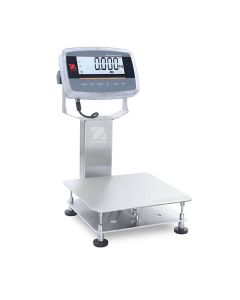 Stainless Steel IP68/69K Platform Scale - Ohaus Defender 6000An IP68/69K stainless steel, trade approved platform scale.
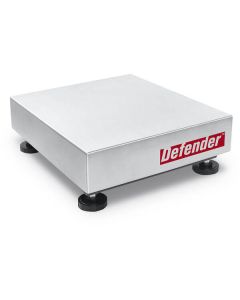 Scale Basework - Ohaus Defender B1 BasesStandard scale base for a variety of trade approved applications.
 A&D IP65 Base work (SB Base Series)A general purpose remote base work, up to 200kg capacity
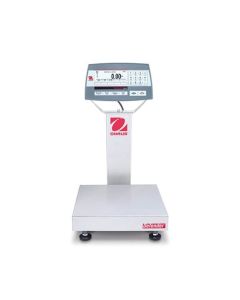 Multifunction Platform Scale - Ohaus Defender 5000A range of intelligent bench and platform scales from 3kg -600kg.
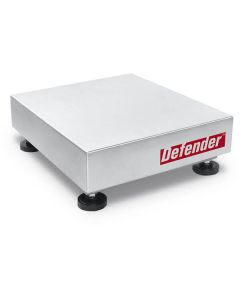 Stainless Steel Basework -Ohaus Defender C1Stainless steel base for wash down environments.
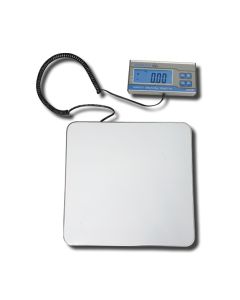 Electronic Parcel Scales - Nuweigh CHR386A compact and portable scale, ideal for parcel and light duty freight use.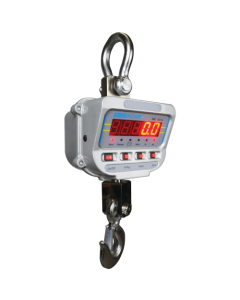
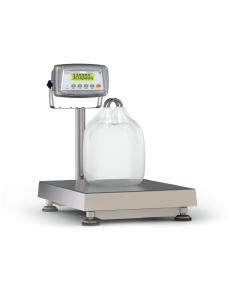 Trade Approved Bench Scale - Rinstrum XG SeriesA trade approved bench or platform scale, from 15-300kg. IP65 rated.
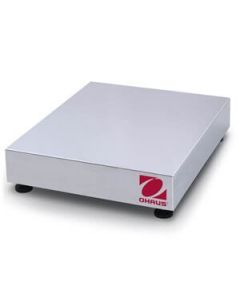 Scale Basework - Ohaus Defender 2000 BasesStandard scale base for a variety of non trade applications.
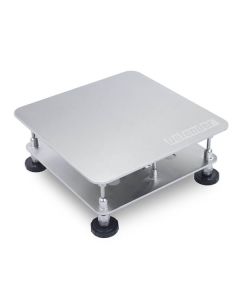 Stainless Steel Basework -Ohaus Defender 6000IP68/69K Stainless steel base for wash down environments.
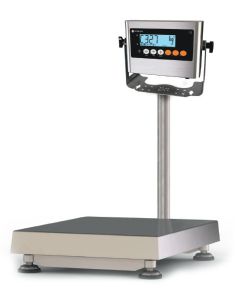 Trade Approved Bench Scale - Rinstrum XH SeriesS/Steel trade approved bench or platform scales, from 15-300kg. IP68/69K rated.
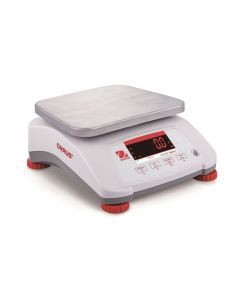 Trade Approved Bench Scale - Ohaus Valor 4000A food safe IPX8 bench scale, with trade approval up to 15kg.From $587.00
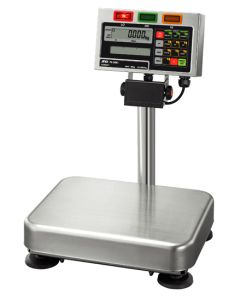 Checkweighing Bench Scale -A&D FS-Ki SeriesA range of waterproof, check weighing scales, ideal for the food industry.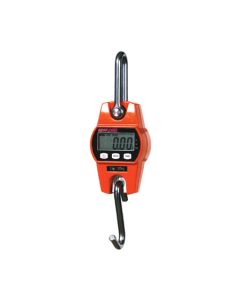
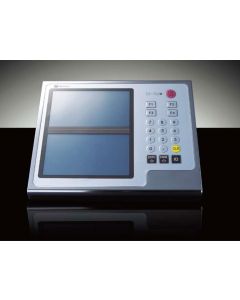
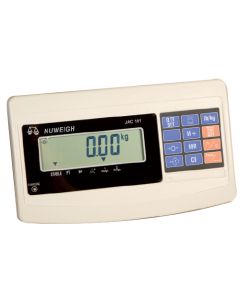 Nuweigh Battery Op. Indicator (JAC101)A rugged trade approved indicator, with internal rechargeable battery operation.
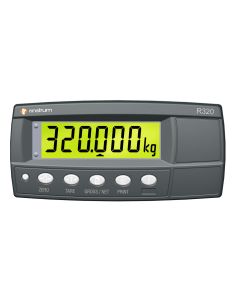 Rinstrum Compact Indicator (R320)A compact indicator with a variety of weighing functions and suitable for...
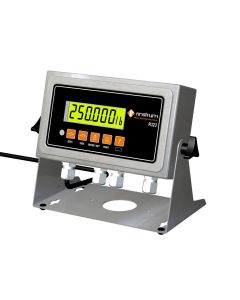 Rinstrum IP65 Stainless Steel Indicator (R323)A multifunction indicator to suit most weighing applications, including...
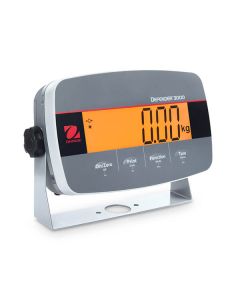 General Weighing Indicator - Ohaus iDT33 SeriesA general weighing indicator for basic industrial applications.
 A&D Compact Indicator (AD-4406)A compact, battery operated indicator for general weighing applications.
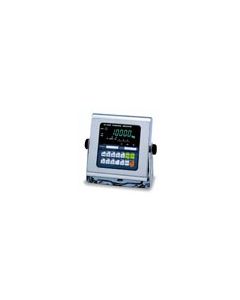 A&D Stainless Steel Indicator (AD-4407)An IP65 dust and waterproof indicator, for wet area applications.
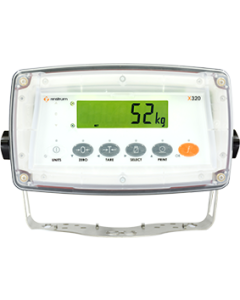 Rinstrum IP69K Indicator (X320)An industrial indicator for use in heavy wash down applications and rugged...
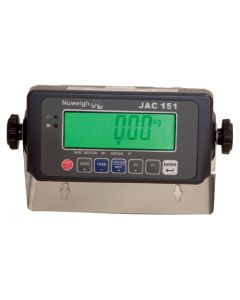 Nuweigh Compact Indicator (JAC151)A compact, slimline indicator, compatible with any base works.
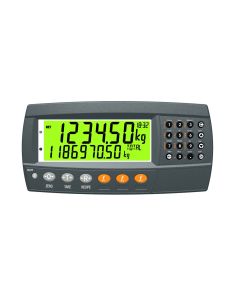 Rinstrum General Purpose Indicator (R42x-K401/2 Series)A general purpose indicator designed to be user friendly and flexible .


