 Call us Today
Baby Scales
-
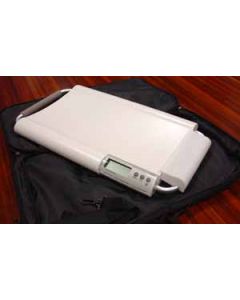 Nuweigh Slimline Portable Baby Scale (LOG244)A lightweight portable baby scale ideal for home visits, complete with carry...
 -
-

-
-


We know every baby grows at their own pace. But tracking a baby’s weight is one of the simplest ways to support their healthy growth — especially for new parents who can be overwhelmed in the first few weeks.
Accurate baby scales help parents and healthcare professionals see whether a baby is feeding properly and gaining weight well.
Our baby scales are precise for hospitals and clinics, and at the same time, simple and safe enough for home use. You can trust these scales every time you weigh a newborn, infant, or toddler to give you clear results all the time.
Our baby scales are easy and safe to use. Here are some features that give families and healthcare teams reason to trust them:
Baby scales are used in many places where accurate infant weighing is important. You can be a parent at home or a professional in a clinic:
These digital baby scales are used in clinics and hospitals as they support vaccination dosing and early detection of health concerns. At home, parents can use them to track their baby’s growth and feeding progress.
Monitoring a child’s growth in the early years is important because it helps in identifying health issues early. For parents, tracking the weight of the baby can be reassuring because it gives them the confidence that feeding and nutrition are on track.
Doctors and parents will be able to spot issues like poor weight gain or dehydration before they become serious issues. While using these scales, you must make sure that you weigh babies at the same time each day and use the tare button.
Yes. Digital baby scales have high-accuracy sensors and are Class III approved. This means these scales give a precise reading, which is important for newborns as every gram counts.
Newborn babies are weighed every day immediately after birth. Then the routine changes to weekly or monthly during check-ups. At home, you must weigh babies only to track growth, and it should not be every day.
In most cases, yes. Digital scales are more accurate. They give faster readings and have helpful features like tare and hold that mechanical scales don’t have. This makes it easier for parents and doctors when weighing infants.
Yes, but choose a scale designed for home use and follow simple safety tips—place the scale on a flat surface; never leave the baby unattended; and support the infant while weighing.
Most baby and infant scales support up to 15–20 kg, which covers newborns through toddlers.
It is better not to use toddler scales for newborn babies. Toddler scales are usually less precise for small weight changes. An infant scale is better for newborns.
Knowing the right weight of the baby can help track growth accurately. These accurate measurements detect health issues early. They also guide feeding and nutrition and ensure correct dosing for vaccines and medicines.
Yes, but only if the scales are designed for neonatal use. For premature babies, the scales should have high accuracy and a stable surface.
You should wipe the surface with a mild disinfectant and avoid harsh chemicals. You should regularly keep the scale dry and check the batteries too. It is also important to have the scales calibrated as per the manufacturer’s recommendation.


