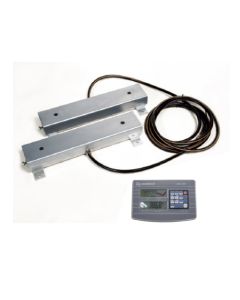
Pallet Scales

9 Items

Set Descending Direction
per page

Pallet scales help businesses weigh goods faster. This reduces delays at receiving, dispatch, and stock transfer points.

These scales also reduce manual handling for safety and less physical strain on staff. When pallet weighing is accurate, it leads to freight weight verification and tighter control over dispatch weights, which means fewer errors when goods leave the warehouse.


What Are Pallet Scales?

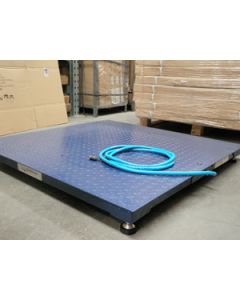
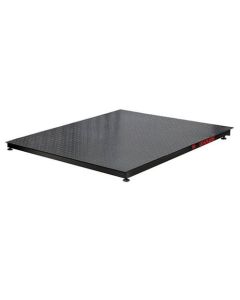
Pallet scales are industrial weighing systems. They are used for measuring palletised loads without extra handling steps. Most pallet scales use a U-shaped frame around the base of a pallet. Some use a low-profile platform the pallet sits directly on. The load cells inside detect the weight and convert it into a digital reading instantly.

Its capacity can range between a few hundred kilograms and several tonnes, and industries that need accuracy use these scales. Warehouses, factories, logistics centres, and distribution facilities use them for speed and floor space.


Types of Pallet Scales

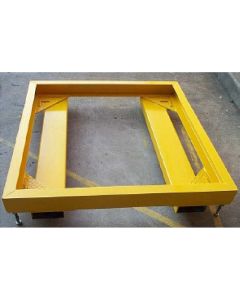
  • U-Frame Pallet Scales are used at fixed weighing points—such as places where forklifts or pallet trucks transport loads.
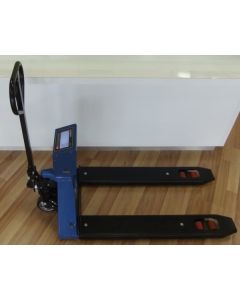
  • Pallet Jack Scales combine transport and weighing in one unit. They are useful in busy sites where pallets move constantly.
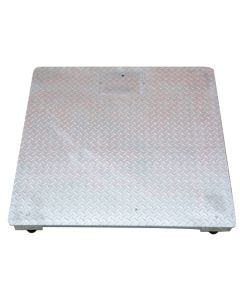
  • Platform Pallet Scales have a larger surface area. They are suitable for oversized or irregular loads.
  • Low-Profile Scales sit close to the floor. They reduce the lift needed to load a pallet and make the operation easier.
  • Speciality Scales offer tailored solutions by providing custom sizes, finishes, or capacities for non-standard operations.


Benefits of Using Pallet Scales

Pallet scales help businesses weigh goods faster. This reduces delays at receiving, dispatch, and stock transfer points. 

Weighing items where you handle them makes warehouse work faster and smoother. Now, workers don't have to waste time going back and forth because it keeps goods moving quickly. 

These scales also reduce manual handling for safety and less physical strain on staff. When pallet weighing is accurate, it leads to freight weight verification and tighter control over dispatch weights, which means fewer errors when goods leave the warehouse.

Businesses that ship goods—pallet scales reduce shipping disputes and avoid unnecessary freight charges caused by incorrect weights. This supports stronger stock control and lower labour effort over time because less rework is needed. In day-to-day operations, this means faster processing and fewer mistakes.

Pallet Scales vs Floor Scales

Feature

Pallet Scales

Floor Scales

Design

U-shaped or pallet-friendly frame

Flat, fixed platform

Accuracy

Reliable for routine industrial weighing

Suited to fixed, repeatable weighing

Ease of loading

Straightforward for palletised goods

Better for goods already positioned

Mobility

Mobile in jack-style models

Usually stationary

Typical applications

Warehousing, dispatch, logistics

Manufacturing, batch weighing, receiving

Cost considerations

Often more workflow-efficient

May involve extra installation cost

Space requirements

Compact, moves with the workflow

Needs a dedicated floor area

Suitable industries

Logistics, freight, food, manufacturing

Warehousing, production, distribution


Moving palletised goods regularly get Businesses more from a pallet scale, especially where speed matters more than a fixed station. Floor scales suit businesses where loads stay in one place and a permanent, high-capacity setup makes more sense.


NMI-Approved Pallet Scales

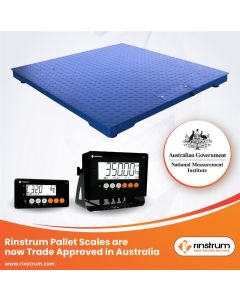
An NMI-approved scale is trade-approved—legally required when a business buys or sells goods by weight. The model is tested by the National Measurement Institute; a Servicing Licensee like Able Scale calibrates and verifies it, and only then can it be used legally for trade. Australia's trade measurement transactions are worth more than $750 billion a year, which is why this approval isn't a formality.

Non-approved models suit internal warehouse use where legal trade measurement isn't part of the job. Able Scale can help determine which category your business falls into.


How to Choose the Right Pallet Scale

Start with maximum capacity, then work through platform size, material, and environment — indoor, outdoor, or washdown. Indicator type, connectivity, and printer integration shape how the scale fits your workflow. Calibration and NMI approval close out the list and matter most if trade use is on the table.

Quick checklist:

  • Capacity
  • Platform size
  • Material
  • Indoor/outdoor use
  • Washdown requirements
  • Indicator options
  • Connectivity
  • Printer integration
  • Calibration
  • NMI approval

Why Choose Able Scale?

Able Scale is an Australian supplier with an extensive pallet scale range and the expert advice to match it to your operation. The team handles calibration, installation, and ongoing servicing, with repairs and technical support available Australia-wide. Options in painted steel, galvanised steel, and stainless steel suit almost any environment.


Frequently Asked Questions

What are pallet scales used for?

Pallet scales weigh palletised goods quickly and accurately in warehouses, factories, logistics centres, and freight operations, without needing to move loads separately.

What capacity pallet scale do I need?

Choose a scale rated above your heaviest expected load, with a safe working margin, so accuracy and durability hold up under regular daily use.

Are pallet scales NMI-approved?

Some models are NMI-approved, and some aren't; approval depends on the specific scale. Trade use always requires the correctly certified, approved version. 

What industries use pallet scales?

Warehousing, logistics, manufacturing, food processing, and freight all depend on pallet scales daily to keep stock movement accurate, fast, and properly recorded. 

When do I need an NMI-approved pallet scale?

You need NMI approval whenever goods are weighed as part of a trade transaction — any situation where the sale price depends on weight.

Can pallet scales be used outdoors?

Yes, they can be used outdoors, but it should be a galvanised or stainless-steel model, because then it can handle humidity and temperature swings better than standard painted-steel alternatives outdoors. 

Are stainless steel pallet scales suitable for food processing?

Yes — stainless steel is generally the preferred choice in hygiene-sensitive environments, since it resists corrosion and holds up to regular washdown cleaning. 

How often should pallet scales be calibrated?

Calibration frequency depends on usage intensity, environment, and compliance obligations; high-volume or trade-certified operations require frequent calibration checks. 

Can I customise a pallet scale for my application?

Yes — most industrial pallet scales can be tailored with different platform sizes, materials, and indicator features to suit specific operational needs. 

Can pallet scales connect to printers or warehouse software?

Many models connect to printers or warehouse management software, depending on the indicator fitted and the configuration chosen at purchase.

 

Australia
Largest independent weighing company in Australia.
Quality products
Quality products backed by Australian suppliers
Budget
Equipment to suit all industries and budgets
ISO Accredited
ISO accredited, industry experts
Help
After sale Customer Support