AbleScale supplies weighing equipment in Australia to businesses from various industries and workloads. A compact bench scale suits a packing station. A washdown model suits a wet production line. It always starts with matching the product to the task, and the AbleScale team is available to help narrow the field.
The options begin with precision laboratory balances reading 0.0001g through to crane scales rated for loads up to 10,000kg—covering everyday production work and specialised industrial applications alike.
AbleScale also manufactures trade-approved models, intrinsically safe options, washdown scales, and heavy-duty units for harsher environments. Trusted brands in the range are A&D, Ishida, Ohaus, Nuweigh, and Rinstrum, backed by ISO accreditation and after-sales support that continues after the purchase date.
Types of Manufacturing & Industrial Scales We Offer
The right industrial scale depends on the product being weighed and the workflow around it. Here is AbleScale's range for various operations:
Compact Bench Scale: Compact bench scales suit light industrial tasks where space is limited, but accuracy is important. The A&D SJ-HS Series and Ohaus Valor 1000 fall into this category, with capacities up to 30kg and trade-approved options on selected models.
|
Best for: packing, light manufacturing, portioning, and routine weigh-only tasks.
|
Waterproof Bench Scale: Waterproof bench scales take care of moisture and washdown routines. Strong examples are: the A&D SJWP, rated IP67, alongside the Ishida IPC-WP and Ishida IWB Series. Capacities reach 15 kg or 30kg depending on the model, and the stainless steel construction works well in food-related settings.
|
Best for: food processing and wet production areas where hygiene is non-negotiable.
|
Stainless Steel Small Platform Scale: A stainless steel small platform scale delivers more strength than a standard bench, and it also maintains a compact footprint at the same time. The Nuweigh JAC949 Small Series is a heavy-duty, dual-range option with a capacity of up to 30kg.
|
Best for: industrial bench work and light platform weighing that needs to survive daily wear.
|
Counting Scale: Counting scales save time when identical items need to be counted by weight. The A&D HC-i Series is a bench-top model that cuts down manual errors and speeds up stock handling, particularly useful in parts rooms and production areas.
|
Best for: stock control, parts counting, hardware, and small-item inventory.
|
Electronic Parcel Scales: Electronic parcel scales earn their place through speed and portability. The Nuweigh CHR386 is compact, lightweight, and rugged, built for parcel and light-duty freight weighing. Dispatch areas and shipping counters benefit most, where staff need a fast, reliable reading without complicated setup.
|
Best for: parcel weighing, freight handling, dispatch, and goods-out use.
|
Crane Scale: Crane scales come into their own when the item is suspended or too awkward for a bench or platform. The Adam IHS handles loads up to 10,000 kg— suitable for heavy industrial work. Environments with overhead lifting already built into the workflow tend to get the most out of this format.
|
Best for: heavy loads, fabrication, warehousing, and suspended weighing.
|
Counting Platform Scale: A counting platform scale performs the same job as a counting scale but is built for larger and heavier loads. Bulk counts, larger containers, and warehouse-style workflows suit this format better than a bench unit ever could.
|
Best for: bulk counting, larger components, production stock control, and industrial warehousing.
|
Trade Approved Digital Hanging Scale: A trade-approved digital hanging scale is the right call when weight forms part of a commercial transaction. Certification is a requirement because the reading needs to hold up for buying and selling by weight, not just for internal reference.
|
Best for: trade-based weighing and regulated commercial applications.
|
Ishida Intelligent Indicator: The Ishida intelligent indicator is for connected weighing systems and process control. Connectivity and programmable functions support check-weighing directly within a broader production process.
|
Best for: check-weighing and connected systems on automated production lines.
|
Rinstrum Indicator: Rinstrum indicators are built for durability and industrial integration. They work with load cells and offer configurable outputs, giving custom applications a dependable indicator at the centre of the setup.
|
Best for: load-cell systems and custom industrial weighing setups.
|
Key Features to Consider
The scale type is only one part of the decision—water resistance and how the unit is powered are also important, just as much as raw capacity.
Water Resistance Ratings
IP ratings show how well a scale resists dust and water. The first digit covers solids, including dust. The second digit covers liquids. This rating is worth checking closely before you buy:
| IP Rating |
Protection Level |
Best Suited To |
| IP65 |
Dust-tight, protected against water jets |
Light washdown or splash-prone areas |
| IP66 |
Dust-tight, protected against powerful water jets |
Tougher, more frequent cleaning routines |
| IP67 |
Dust-tight, protected against temporary immersion |
Wet work areas and food processing |
| IP68 |
Dust-tight, protected against prolonged immersion |
Harsher wet conditions |
| IP69 |
Dust-tight, protected against high-pressure, high-temperature washdown |
Demanding hygiene environments |
Quick tip: Start with your cleaning routine, not the price tag. A dry warehouse, a rinse-down food line, and a high-pressure washdown area each call for a different level of protection, and buying above what you need adds cost without adding value.
Weighing Resolution
Resolution is the smallest change a scale can display. Higher resolution suits work where fine detail matters, while lower-resolution, higher-capacity models suit heavier work. Maximising both at once usually isn't realistic on a single unit. The Nuweigh JAC838 and Ohaus Ranger 7000 are worth a look when finer resolution is the priority.
Power Source: Battery vs AC
Battery-powered scales suit portable or mobile workstations, with the Ohaus Ranger 3000 and Ishida IWB Series as good examples. AC-powered models suit fixed stations for continuous use, such as the Ishida IWX30, designed specifically for food processing lines. If the scale stays put, AC power is generally the smarter option. If it moves around the floor, battery power is easier to live with.
Applications Across Manufacturing & Industrial Sectors
Industrial scales support a wide mix of models to match the sector and the workflow around it.
| Sector |
How Scales Are Used |
| Food processing & packing |
Washdown environments, portioning, controlled packing |
| Warehousing & logistics |
Dispatch, freight weighing, stock movement |
| Metal fabrication & foundries |
Heavier loads, tougher handling conditions |
| Chemical & pharmaceutical |
Cleanability and accuracy in equal measure |
| Assembly & production lines |
Repeatable weighing, process consistency |
| Quality control |
Check-weighing and verification |
| Goods inwards & dispatch |
Receiving, packing, outgoing freight |
| Primary production & wholesale |
Bulk handling, trade use, commercial weighing |
Frequently Asked Questions
How do I choose the right manufacturing scale?
Start with three things: the load, the accuracy you need, and the environment the scale will work in. Wet or frequently cleaned areas call for the right IP protection, and trade use calls for certification. AbleScale's range covers compact bench units through to heavy industrial equipment, so the right match comes down to the task at hand.
What does an IP rating mean?
An IP rating shows how well a scale is protected against dust and water. The first number shows solids, and the second shows liquids. IP67, for example, means the unit is dust-tight and can handle temporary immersion.
Which IP rating do I need for food processing?
It depends on the cleaning method in use. IP65 may cover light splash exposure, while IP66 or IP67 usually suits hose cleaning better. For high-pressure or hot washdown, IP69 is the stronger option. The harsher the cleaning routine, the more protection is worth paying for.
What is a trade-approved scale, and do I need one?
A trade-approved scale is certified for buying and selling by weight. Commercial transactions usually require this approval, while internal-only use often doesn't. The right choice comes down to how the weight reading will actually be used.
Battery or AC power — which should I choose?
Choose battery power if the scale needs to move around or work away from a fixed station. Choose AC power if it stays in one place and runs for long periods.
Do you offer support after purchase?
Yes. AbleScale's after-sales support covers setup and ongoing product guidance, and for many buyers, that support ends up mattering as much as the scale itself.
How heavy a load can a crane scale handle?
The Adam IHS crane scale referenced by AbleScale can handle up to 10,000kg, which makes it suitable for heavy industrial loads and suspended weighing tasks.
What is weighing resolution and why does it matter?
Weighing resolution is the smallest weight change a scale can show. It matters because finer resolution helps with small parts, careful checks, and precision work, while lower resolution is usually better for heavier loads.
Which brands does AbleScale supply?
The brief names A&D, Ishida, Ohaus, Nuweigh, and Rinstrum as key AbleScale brands. These cover compact bench scales, washdown models, indicators, and heavier industrial systems.
Ishida Intelligent Indicator vs Rinstrum Indicator?
The Ishida intelligent indicator focuses on connectivity, programmable functions, and check-weighing. Rinstrum indicators focus on durability, load-cell integration, and configurable outputs.
Can one scale both weigh and count?
Yes. Some models are designed to do both, which is useful when stock control and production tasks happen on the same unit. It can save time and reduce handling.
How often should a scale be calibrated?
It all depends on how you use it and how critical the readings are. If the scales are heavily used, they should be checked regularly. Low-use units may need less frequent servicing. You can schedule calibration plans if you use the scales for critical operations.
Do you offer support after purchase?
Yes. AbleScale offers after-sales support for ongoing reliability.


 Call us Today

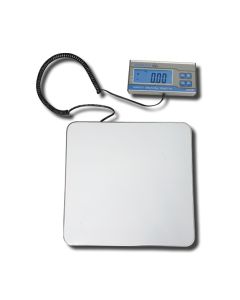 Electronic Parcel Scales - Nuweigh CHR386A compact and portable scale, ideal for parcel and light duty freight use.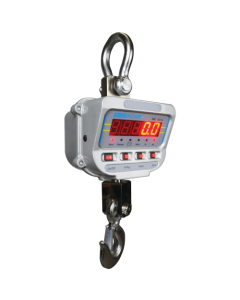
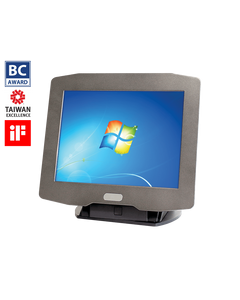 Touch Screen Panel PC - Senor ISPOS900An IP66 touchscreen panel PC, ideal for all POS solutions.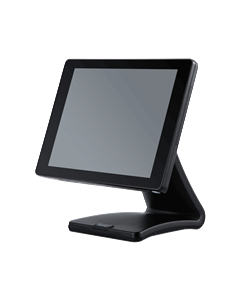
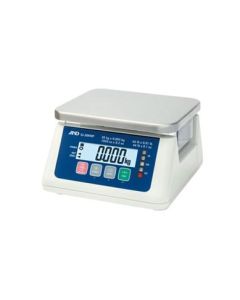
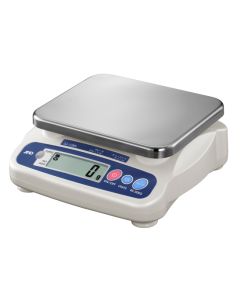 Compact Bench Scale - A&D SJ-HS SeriesA low cost, weigh scale up to 30kg with trade approved options.From $330.00
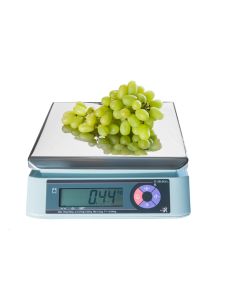 Compact Trade Approved Bench Scale - Ishida IPCA range of weigh only bench scales up to 30kg capacity, and approved for trade...From $460.00
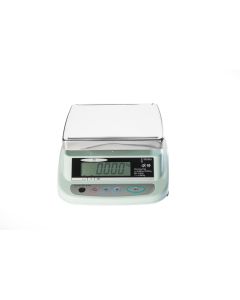 Waterproof Compact Bench Scale - Ishida IPC-WPA range of water proof, weigh only scales up to 15kg, and approved for trade...From $715.00
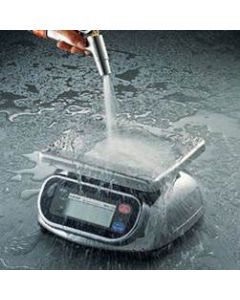 Stainless Steel Bench Scale - A&D SK-WP SeriesA series of IP65 dust and waterproof bench scales up to 20kg.From $719.00
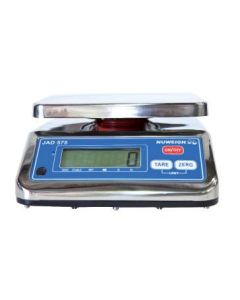 Waterproof Bench Scale - Nuweigh JAD575A stainless steel bench scale up to 15kg, ideal for portable use.
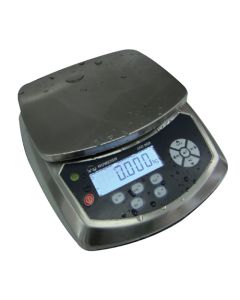 Stainless Steel Bench Scale - Nuweigh JAD989An IP67 bench scale ideal for commercial applications
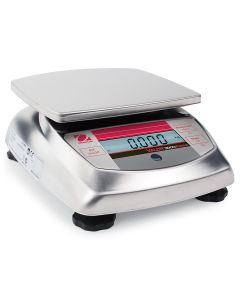 Stainless Steel Bench Scale - Ohaus Valor 3000A rugged bench scale with stainless steel IP65 housing up to 6kg.
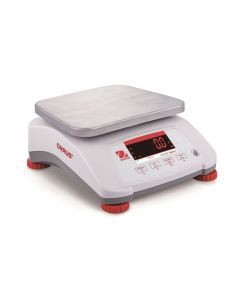 Trade Approved Bench Scale - Ohaus Valor 4000A food safe IPX8 bench scale, with trade approval up to 15kg.From $587.00
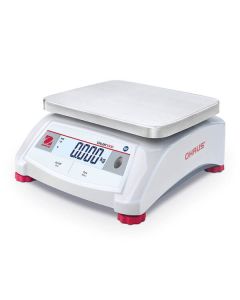 Compact Scales - Ohaus Valor 1000A low cost compact scale, ideal for portioning up to 30kg.From $355.00
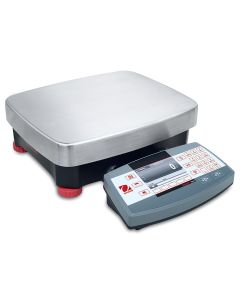 Industrial Bench Scale - Ohaus Ranger 7000A high resolution industrial bench scale up to 35kg.
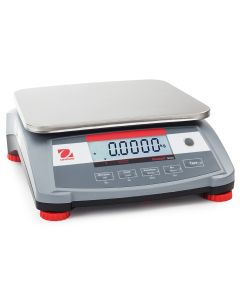 Battery Op. Bench Scale - Ohaus Ranger 3000A multipurpose bench scale with large display and battery operation.From $750.00
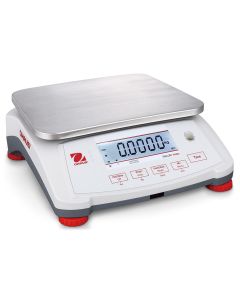 Compact Bench Scale - Ohaus Valor 7000A compact bench scale designed for non trade food applications.
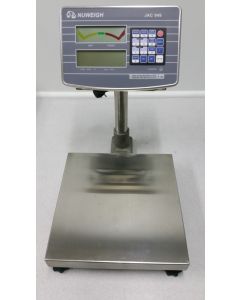 Stainless Steel Small Platform Scale - Nuweigh JAC949 Small SeriesA heavy duty, dual range bench scale, up to 30kg capacity.
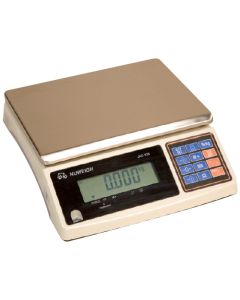 High Resolution Bench Scale - Nuweigh JAC838A weigh only high resolution bench scale with large platter up to 30kg.
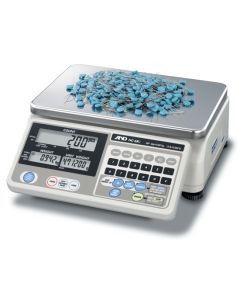 Counting Scale - A&D HC-i SeriesA quality, easy to operate bench top counting scale, with multiple...From $609.00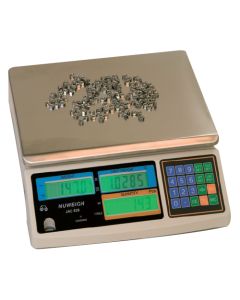
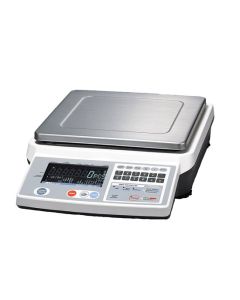 High Resolution Counting Scale - A&D FC-i & FC-Si SeriesA range of counting scales with a high internal resolution of up to...
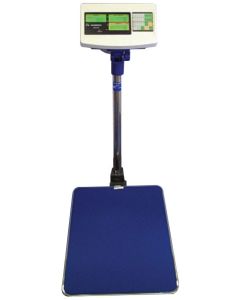 Counting Platform Scale - Nuweigh JAC919A rugged counting scale, with large base and 150kg capacity.


