Reliable Platform Scales for Industrial and Commercial Use
Some loads are too big for a bench scale. An industrial platform scale is the right tool for cartons, drums, crates, stock bins, and bagged goods—if they are heavy or bulky. A flat steel or stainless steel platform rests on load cells, and a digital indicator turns their signal into a clear weight reading. You place the item and read the display. That’s it. This routine is for warehouses, workshops, factories and dispatch bays.
Able Scale supplies digital platform scales from established manufacturers such as A&D, Ohaus, Nuweigh, Ishida and Rinstrum. Capacities run from 3 kg to 600 kg, with plastic or stainless steel housings and battery or mains power. Models with National Measurement Institute (NMI) trade approval are also available. Browse the range below, or call 1300 731 360 and we’ll match a scale to your site.
Platform Scale Range and Features
Able Scale stocks four types of digital platform scales. Pick the one that matches your load and your floor.
| Type |
Capacity |
Best for |
| Digital platforms for daily operations |
Up to 300 kg |
Dispatch desks and stores |
| Heavy-duty platform scales |
Up to 600 kg |
Large cartons and drums with frequent use |
| Compact scales for bench and workstation use |
3 to 30 kg |
Packing benches and small parts |
| Washdown stainless steel scales |
Up to 300 kg |
Food production and wet areas (IP68 to IP69K) |
Digital readouts give you a clear weight and a quicker routine. Readings take as little as seconds, so chances of transcription errors are few. Plenty of models add tare, counting, checkweighing and accumulation, and 16 of our 21 platform scales offer RS232 output for a printer or PC.
Five specifications decide the fit. Capacity caps your heaviest load, and platform widths run from 250 mm to 600 mm. Readability stretches from under 2 g to 100 g. Housings are plastic or stainless steel. Indicators range from basic displays to washdown units.
Where Are Platform Scales Used?
Australian businesses reach for a platform scale whenever a weight reading drives a decision, such as a dispatch check or a batch record.
| Sector |
What gets weighed |
What to look for |
| Warehousing and Logistics |
Cartons, parcels, stock and dispatch items |
Low-profile platform, battery power |
| Manufacturing and Production |
Raw materials, components, containers and finished products |
Repeatable readings, RS232 or Ethernet output |
| Packaging and Inventory Management |
Packed goods and stock for routine weight checks |
Counting and checkweighing functions |
| Commercial and Industrial Operations |
Mixed loads of varying size |
Capacity and platform size matched to use |
Choose by load size, platform size, frequency of use and operating conditions. A food plant that washes down daily needs an IP69K stainless steel model. A freight dock needs a low platform a trolley can roll onto. Food processors, growers, recyclers and construction suppliers lean on platform scales too.
How to Choose the Right Platform Weighing Scale
Gather four details before you enquire. We can then quote the right scale the first time.
Weighing Capacity and Platform Dimensions
Pick a capacity above your heaviest load and a platform larger than your biggest item. Note your typical and lightest loads too. High-capacity scales read in coarser steps, so a scale rated far above your normal weights reads less finely.
Readability and Display Options
Readability is the smallest step the display shows. Weighing parcels to the nearest 10 g needs a finer scale than weighing drums to the nearest 100 g. Choose a display you can read from where you stand. If the platform sits on the floor, add a remote display.
Construction and Operating Environment
Dry stores suit painted steel or plastic housings. Wet or hygiene-sensitive areas call for stainless steel with an IP69K rating, which covers high-pressure, high-temperature washdown. Check your cleaning routine and floor space before you commit.
Trade Approval Requirements
Under Australian law, any scale that sets the price of goods sold must carry NMI pattern approval and verification. Approval depends on how you use the scale, so confirm yours before you buy.
Quick check: 14 of our 21 platform scales carry NMI trade approval. If weight sets a price, start with these models.
Why Choose Able Scale for Industrial Platform Scales?
Able Scale is the largest independent weighing company in Australia, and we’ve traded for 55 years. Our platform scales come from A&D, Ohaus, Nuweigh, Ishida and Rinstrum, backed by Australian suppliers. Our ISO accredited team repairs and calibrates weighing equipment in our workshop or on your site with a mobile technician. Need a scale short-term? Hire one by the day, week or month, or permanently.
Tell us your maximum load, platform size, site conditions, and trade approval needs. Call 1300 731 360 or send an enquiry online, and we’ll recommend the right platform scale.
FAQs
1. What is a platform weighing scale?
A platform weighing scale is an electronic scale with a flat, load-bearing platform. It also has a digital indicator. Load cells under the platform measure cartons, drums, crates, or containers, and the indicator shows the result. Platform scales carry far more weight than bench scales.
2. What are digital platform scales used for?
Digital platform scales weigh stock, parcels, raw materials, and finished goods in warehouses, factories, workshops and dispatch bays. Staff use them during dispatch checks, batch weighing, counting and stock control. Clear digital readouts speed up each weigh and cut reading errors.
3. How do I choose the right platform scale capacity?
You can start with your heaviest load and choose a capacity above it, but make sure that the platform is larger than your biggest item. Note your typical and lightest loads too. A scale rated far above normal use reads in coarser steps, so match capacity to your real weight range.
4. What types of items can be weighed on platform scales?
Items like cartons, parcels, bagged goods, crates, drums, tools, and components can be weighed on platform scales— all up to the rated capacity. You should carefully place items within the platform edges so the load cells read the full weight.
5. What is the difference between weighing capacity and readability?
Capacity is the heaviest load a scale can weigh. Readability is the smallest change the display shows, such as 10 g or 100 g. Pair a 600 kg capacity with 100 g readability, and bulk stock weighs quickly, but small parts disappear between the steps.
6. Are platform scales suitable for heavy industrial loads?
Yes, they are suitable for loads up to 600 kg. Our heavy-duty platform scales carry that load for daily use in warehouses and factories. If you need more, then it would call for a pallet scale. Our team can confirm the right model for your maximum load.
7. Do platform scales used for commercial transactions need trade approval in Australia?
Yes. Australian law requires any scale that sets the price of goods sold to carry National Measurement Institute pattern approval and verification before use. Scales used only for internal checks don’t need approval. Not sure which rule covers your business? Ask us.
8. How should platform scales be maintained?
Keep the platform clean and level, and never drop loads onto it. Check the zero reading each day. Book a calibration check at least once a year, or after any move or repair. Our servicing team can calibrate on site or in our workshop.
9. What is the difference between a platform scale and a bench scale?
A bench scale is smaller and can be placed on a counter or workbench. It weighs lighter items such as parts and packets. A platform scale has a larger surface and higher capacity, so it can weigh heavier objects such as cartons, drums, crates, and heavier stock. Some models, like the Ohaus Defender 5000, work as either.
10. Can a platform scale be used for pallet weighing?
Usually not. Our platform scales measure up to 600 mm wide, and a standard Australian pallet measures 1,165 mm square. Pallets need a pallet scale, such as the Rinstrum RPS1212, with a platform sized for the load. We stock both types and can advise which one fits.
11. Can platform scales be made from stainless steel?
Yes. Our stainless steel platform scales include the Ohaus Defender 6000 and the Nuweigh JAC959 series. Several carry IP68 or IP69K ratings for wet and washdown areas, and some hold NMI trade approval. Stainless steel resists corrosion and cleans easily.
12. Can platform scales be customised?
Yes. Able Scale customises weighing systems according to your platform size, capacity, indicator, and connection needs. Send us your maximum load, platform size, working environment, and any printer or PC link, and our team will specify a suitable solution.


 Call us Today

 Defender Bench & Platform Scales - Ohaus Defender 3000 iD33PA series of bench and platform scales for general weighing, up to 600kg, and...
 Stainless Steel Platform Scale - Ohaus Defender 3000 iD33XWA complete stainless steel, trade approved platform scale, up to 300kg.
 Multifunction Platform Scale - A&D HVW-C SeriesA high quality triple range weighing scale with LCD display and IP65 base, up...
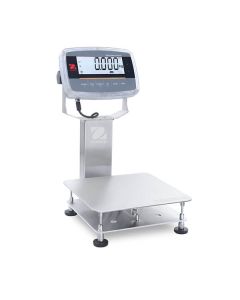 Stainless Steel IP68/69K Platform Scale - Ohaus Defender 6000An IP68/69K stainless steel, trade approved platform scale.
 Washdown Platform Scales - A&D SC/SE SeriesA series of IP68 scales up to 150kg, with either powder coated or stainless...
 IP69K Washdown Scales -A&D SW SeriesAn IP69K bench or platform scale for hostile environments, up to 150kg.
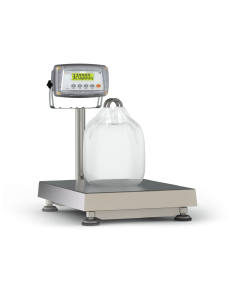 Trade Approved Bench Scale - Rinstrum XG SeriesA trade approved bench or platform scale, from 15-300kg. IP65 rated.
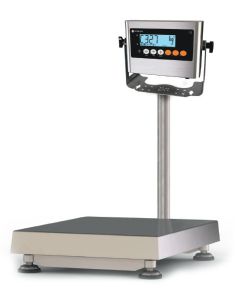 Trade Approved Bench Scale - Rinstrum XH SeriesS/Steel trade approved bench or platform scales, from 15-300kg. IP68/69K rated.


