 Call us Today

Semi Micro Balances
Shopping by
-
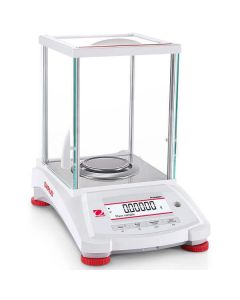 Semi-Micro Balance - Ohaus Pioneer Semi MicroA semi-micro balance designed for high accuracy.



Semi-micro balances are precision laboratory instruments with readability finer than a standard analytical balance—0.01 mg against the 0.1 mg balances. That extra decimal place is important when a sample is too small for conventional weighing to hold up.
Readability describes the smallest mass increment a balance can display. It is different from accuracy. A balance can show five decimal places and still return an unreliable result if repeatability and environmental control fall short. Repeatability measures how consistently the balance returns the same value for the same sample under the same conditions, and minimum sample weight sets the smallest quantity that can be weighed within an acceptable margin of error.
Need a hand narrowing down the right model?
Talk to our team — we'll match a balance to your application, not just your budget.
A 0.01 mg readability means the balance registers changes as small as ten micrograms, roughly a tenth the mass of a grain of table salt. For sub-milligram formulation work, filter weighing, or trace-level chemical analysis, that resolution is what separates a usable result from a rounding error.
Most semi-micro models carry an internal motorised weight that recalibrates the balance automatically, either on a fixed schedule or whenever onboard sensors detect a temperature shift of a degree or two. This keeps accuracy on track between services without pulling staff away from bench work.
At this level of precision, small disturbances show up in the result. Here's how semi-micro balances are built to counter them:
| Environmental Factor | How the Balance Responds |
| Air currents/draughts | Sealed draft shield around the weighing pan |
| Vibration | Dampened base or anti-vibration feet |
| Temperature fluctuation | Temperature-compensated load cell with auto-recalibration |
Onboard memory and USB or RS-232 connectivity let results flow straight into a LIMS or audit trail, formatted to GLP/GMP standards. That's one less manual transcription step and one less place for error to creep in.
A clear graphic display and multiple selectable weighing units make everyday use straightforward, backed by simple internal calibration whenever a check is needed. Technicians spend less time fighting the equipment and more time on the analysis itself.
The main difference comes down to readability and capacity. Analytical balances read to 0.1 mg with capacities up to a few kilograms, covering most routine lab weighing. Semi-micro balances push readability to 0.01 mg, one decimal place finer, while trimming capacity to around 100–220 g. That trade-off is deliberate: the finer the readout, the more the balance needs to sacrifice load capacity to hold its precision steady.
Semi-Micro vs Analytical
| Analytical Balance | Semi-Micro Balance | |
| Readability | 0.1 mg | 0.01 mg |
| Typical capacity | Up to a few kg | 100–220 g |
| Best suited to | Routine QC, general lab weighing | Trace-level, sub-milligram, formulation work |
| Environmental sensitivity | Moderate | High |
Balance Types at a Glance
| Balance Type | Readability | Typical Capacity | Best Suited To |
| Precision | 0.001–0.1 g | Up to 10+ kg | General lab and production weighing |
| Analytical | 0.1 mg | Up to a few kg | Routine QC, standard lab work |
| Semi-Micro | 0.01 mg | 100–220 g | Sub-milligram, trace-level, formulation |
| Micro | 0.001 mg or finer | Under 10 g | Ultra-trace, filter weighing, specialist research |
Neither semi-micro nor analytical is a straight upgrade on the other. The right choice depends on what's actually landing on the pan.
Readability alone doesn't tell you whether a balance will suit your lab. Match it to the weighing method and the performance the application actually demands, then work through the rest of the specification.
Readability: The finest increment the balance can display, usually 0.01 mg for this class.
Capacity: The maximum load the balance can hold while still weighing accurately, generally 100–220 g.
Repeatability: How consistently the balance returns the same reading for the same sample. This is the figure that underpins trust in your data.
Minimum sample weight: The smallest quantity you can weigh and still stay within an acceptable error margin. Working below it undermines the whole result.
Calibration: Internal or external, manual or automatic. For audit-ready results, look for calibration traceable to ISO/IEC 17025-accredited certificates using OIML-class test weights.
Environmental conditions: Draughts, vibration, and temperature swings all affect sub-milligram readings. A stable bench and a proper draft shield matter as much as the balance itself.
Data connectivity: USB, RS-232, or GLP/GMP-formatted output for labs that need traceable, audit-ready records.
Weigh these against your actual workflow, not just the spec sheet, and the right balance becomes obvious.
Able Scale supplies laboratory weighing equipment to labs across Australia, with a semi-micro balance range spanning established brands including OHAUS. Our technical team has fitted these balances into settings from single-analyst research labs to multi-site pharmaceutical QC operations, and brings that hands-on experience to every recommendation.
Beyond product selection, we offer technical advice on calibration and connectivity, plus service support where applicable. Every recommendation is based on what you're actually weighing, not just the spec sheet. If you need help narrowing down a shortlist, our Australian-based support team is ready to talk through the details before you buy.
View our semi-micro balance range or get in touch for tailored advice.
Think of it as the balance you reach for when a standard analytical model isn't precise enough. A semi-micro balance reads down to 0.01 mg, one decimal place finer than a typical analytical balance, which makes it the natural step up for labs working with very small samples.
Mostly, it comes down to precision at low sample sizes: filter weighing, formulation work, pharmaceutical ingredient prep, and chemical analysis where a standard analytical balance can't quite hold the required tolerance. You'll find them doing this work in pharmaceutical QC labs and academic research settings across Australia.
Mainly readability and capacity. An analytical balance reads to 0.1 mg and usually handles a few kilograms. A semi-micro balance reads ten times finer, to 0.01 mg, but gives up some of that capacity in return, typically capping out around 100–220 g.
Not automatically; it depends on what you're weighing. Within its working range, a semi-micro balance gives you a more precise result. Outside that range, or for heavier samples, a standard analytical balance often does the job just as well, at a lower cost.
It can pick up mass changes as small as ten micrograms, roughly a tenth the weight of a grain of salt. That said, readability is only one factor. Repeatability and calibration, plus how well-controlled your lab environment is, all affect whether you get that accuracy in practice.
Start with readability and capacity, since those set the boundaries of what the balance can do. Then check repeatability and minimum sample weight, because they tell you whether your results will hold up. Calibration method and environmental sensitivity are needed too, and so is data connectivity if you need traceable records.
Yes, regularly. Most models include internal automatic calibration that runs on a schedule or kicks in when the balance senses a temperature change. It's still worth scheduling external calibration with certified test weights at set intervals, particularly if your lab works to GLP or GMP requirements.
Yes, they're a common fixture in pharmaceutical labs, used across formulation and quality control, plus research work that calls for precise, traceable dosing at sub-milligram levels. The fine readability and GLP/GMP-compatible data output line up well with what these labs are required to document.
A microbalance goes even finer, down to 0.001 mg or better, but that precision comes with a smaller capacity and far more sensitivity to vibration and drafts. A semi-micro balance sits a step below that, yet it's easier to live with day-to-day and still accurate enough for most lab work.


