What is an Analytical Balance?
Laboratories use an analytical balance as a precision weighing instrument. An analytical balance measures mass to four decimal places — 0.0001 g (0.1 mg). A standard bench scale reads to 0.1 g or 1 g. That gap matters in a lab.
These two features are necessary for this kind of precision: a draft shield and proper calibration. The draft shield is a glass enclosure that surrounds the weighing pan. It blocks airflow. The airflow, if not blocked, can shift the reading. Achieving accurate results without the glass enclosure is difficult.
Calibration makes readings traceable. Analytical balances offer both internal and external calibration. Internal calibration runs automatically via a built-in weight. External calibration requires placing a certified reference weight on the pan by hand.
Applications of Analytical Scales
Analytical scales serve industries where even minute errors in measurement have real consequences.
| Industry / Setting |
How Analytical Scales Are Used |
| Pharmaceutical Laboratories |
Weigh active ingredients for precise formulations. Even slight deviations can impact product potency and patient safety. |
| Chemical Testing Labs |
Prepare reagents and measure samples for titration, chemical analysis, and controlled reaction work. |
| Research Institutions |
Ensure repeatable, documented measurements for reliable experimental outcomes. |
| Universities & Schoolsv |
Support practical learning in chemistry, biology, and materials science by teaching precise measurement techniques. |
| Food Laboratories |
Perform nutritional analysis, ingredient verification, and quality checks on small-batch samples. |
| Manufacturing Quality Control |
Verify component weights, confirm tolerances, and maintain consistency across production batches. |
Features to Look for in an Analytical Weighing Balance
Every analytical balance does not suit every application. These are the most important features to look out for:
- Internal calibration keeps the balance accurate without manual intervention. External calibration requires a certified weight, which works well when you already run scheduled calibration checks.
- Readability of 0.1mg is standard for analytical work. Some applications require 0.01mg (semi-micro balances).
- A draft shield is not optional — it is essential. Look for a balance with side doors and a top opening for easy access to the pan.
- RS232 and USB connectivity let you send data directly to a computer or LIMS, which removes manual data entry and reduces transcription errors.
- Touchscreen displays simplify operation and reduce the steps needed to change settings or run applications like density determination or check weighing.
- Vibration resistance and auto-levelling matter if your lab benches are not perfectly stable or if the balance is used near moving equipment.
- Data logging and GLP compliance produce printed or digital records with date, time, and balance ID — a requirement in regulated industries including pharmaceuticals and food testing.
Why Choose Able Scale for Analytical Balances?
Able Scale is an Australian supplier with years of experience in laboratory and industrial weighing. We stock analytical balances from A&D and Ohaus — two brands trusted in research and quality control.
We do not just supply equipment. We provide calibration services. We also provide on-site support and remote assistance to keep your balances performing accurately. Every balance we supply meets Australian standards for certified weighing equipment.
Our team can advise on capacity and readability before you buy. If you need help with selecting the right model for your application, contact us today.
FAQs
1. When should you use an analytical balance?
You should use an analytical balance when your application requires measurements to 0.1mg. It is used in pharmaceutical compounding, chemical preparation, research, and quality control.
2. How accurate is an analytical weighing balance?
Analytical balances read to 0.0001 g (0.1 mg). Semi-micro models read to 0.01mg. Accuracy depends on the correct placement and calibration. Also, the correct use of the draft shield matters.
3. Why do analytical balances have draft shields?
When there is an airflow across the weighing pan, it shifts the readings. The draft shield helps to remove this flow of air by enclosing the pan in glass panels. This makes the readings possible.
4. How often should an analytical balance be calibrated?
Analytical balances should be calibrated annually or semi-annually. Keep in mind that if the analytical balance is used quite a lot, then it may require more checks.
5. What is the difference between internal and external calibration?
Internal calibration uses a built-in certified weight that activates automatically — often triggered by temperature change or a set time interval. External calibration requires you to place a certified reference weight manually on the pan.
6. Why is my analytical balance giving unstable readings?
There could be many reasons for your analytical balance to give unstable readings. The number one cause is airflow. There are also other reasons for unstable readings, such as vibration from nearby equipment or a pan that needs to be cleaned. Sometimes, the balance could also be out of level.
7. Where should an analytical balance be placed?
You should place an analytical balance on a stable and level bench. It should be placed away from vents, windows, doors, and any equipment that could cause vibration. There are anti-vibration tables available to improve results.
8. What is the minimum weight an analytical balance can measure accurately?
This depends on the model. Most analytical balances have a minimum weight specification in their documentation. Weighing below this threshold yields unreliable results regardless of readability.
9. Can analytical balances connect to computers or laboratory software?
Yes. Many models have the RS232 or USB ports. These ports can transfer data to spreadsheets and laboratory management software.
10. Are analytical balances suitable for pharmaceutical laboratories?
Yes. Analytical balances with GLP compliance and internal calibration are suitable for pharmaceutical laboratory work in Australia. They meet the documentation and accuracy requirements.



 Call us Today
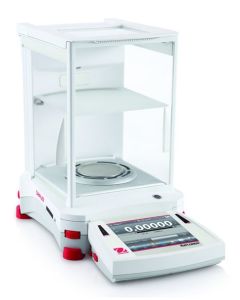 Analytical Balance - Ohaus Explorer Semi MicroA balance for when extreme accuracy is required to 0.01mg
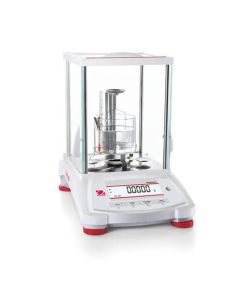 Economical Analytical Balance - Ohaus Pioneer PXA analytical balance designed for your everday weighing needs, at an...
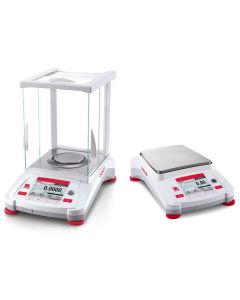 Touch screen Analytical Balance - Ohaus Adventurer AXAn analytical balance with colour touch screen up to 320g.
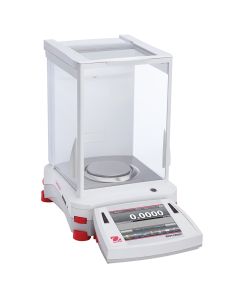 Analytical Balance - Ohaus Explorer EX AnalyticalA high performance 0.1mg balance with easy to use features.


