

 Call us Today


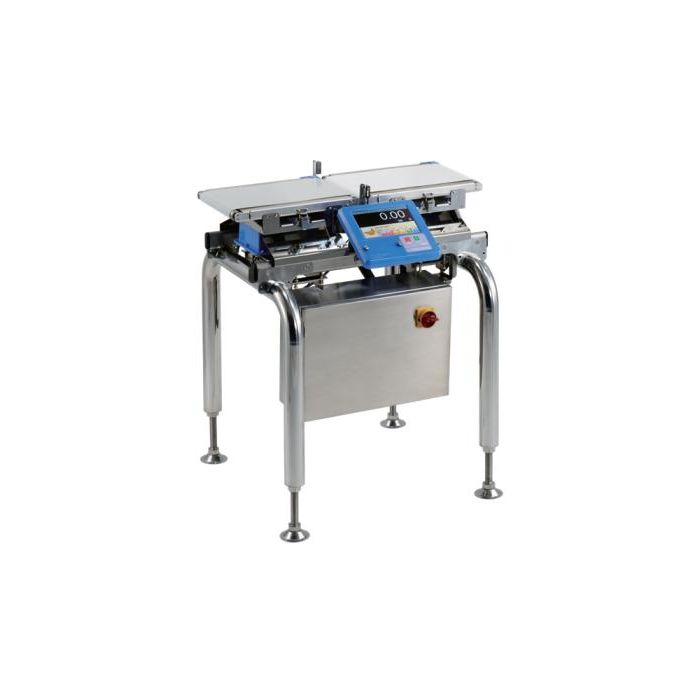
A checkweigher is a weight indicator that is used to reject any pack that falls off the target weight on the production line. In Australia, it is the quickest method for manufacturers to demonstrate that the contents of a package meet the claims made on the label. Underfilled packs risk a trade measurement breach and unhappy customers. Overfilled packs give away products you paid to make. Inconsistent weights cause both. An industrial checkweigher catches them at line speed and records the result.
Understanding Packaging Weight Regulations
The trade measurement laws in Australia apply to pre-packaged goods sold by quantity. They are administered by the National Measurement Institute (NMI). All packages should be accurately marked with a net measurement, which excludes the packaging.
Packers choose a method based on the product. The NMI guide to pre-packaged goods sets out the rules:
| Method | Average rule | Individual pack rule |
|---|---|---|
| Average system | Sample average cannot fall below the marked quantity | No pack can fall short by more than 5% |
| Average Quantity System (AQS) | Average cannot fall below the marked quantity; a small number of packs may exceed a tolerable deficiency | No pack can exceed twice the tolerable deficiency |
| Random-weight packs | No average applies | Every pack must hold at least the marked amount |
The two errors cost different things. An underweight pack risks penalties and a damaged customer relationship. An overweight pack is legal, but every extra gram is product you give away. NMI also tells packers to keep measurement records and use them to set future fill targets. A&D explains AQS and "e" weights in more detail.
Need a checkweigher that supports AQS records? Talk to the Able Scale team or call 1300 731 360.
What Is a Checkweigher and How Does It Work?
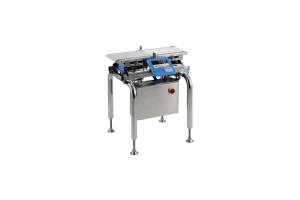
A Checkweigher is a scale that weighs products automatically on a line. Each pack is loaded onto a weighing platform by a conveyor. The weight is converted into an electrical signal by a load cell located beneath the platform. That signal is sent to the lower and upper limits you set, and the control unit compares the signal with them. Packs within the limits continue. If a pack is outside the limits, it will cause the rejection mechanism to push, air-blast or divert the pack off the line. Rejects fall into a reject bucket or reject line.
How Checkweighers Help Manufacturers Meet Weight Regulations
Detecting Underweight and Overweight Products
The checkweigher weighs every pack, not a sample. A pack below the lower limit never reaches a pallet. A pack above the upper limit comes off the line too, so overfill stays visible. Non-compliant packs stop at your dock, not the customer's.
Maintaining Consistent Product Weight
Checkweighing scales log weight pack after pack, so drift shows in the trend before it causes rejections. Some systems also signal the filler to adjust product flow.
Reducing Product Giveaway and Financial Losses
Many manufacturers add a buffer of extra product to stay above the limit. For example, a 5% overfill gives away 1 in 20 packs free. Across tens of thousands of packs, that adds up. A checkweigher confirms each pack, so you can run closer to the stated weight.
Supporting Quality Control and Traceability
Weight records show which product, shift, or filler is drifting. Many inline units export batch reports by USB or to SQL databases. Those records support audits from supermarkets and NMI inspectors. If a sample fails, NMI expects you to quarantine the packs, find the cause, and fix it.
Want to cut giveaways on your line? Ask Able Scale for a checkweigher recommendation.
Key Features to Look for in an Industrial Checkweigher
Match the machine to your product type, pack format, and production needs. A unit suited to light sachets will not suit heavy cartons.
| Feature | What to look for |
|---|---|
| High-speed weighing | Up to 650 packs a minute on top-end units, depending on the application |
| Measurement accuracy | Stable load cells and vibration compensation |
| Automatic rejection | Pusher, air blast or flap conveyor that suits your pack |
| Real-time monitoring | Live weights and counts at the control unit |
| Data recording | Batch reports by USB or SQL database |
| Line connectivity | Links to fillers and metal detectors |
| User-friendly controls | Product changeovers without specialist help |
Industries That Benefit from Automated Checkweighing Systems
| Industry | Typical checks |
|---|---|
| Food and beverage | Packaged food and bottled products against marked quantities |
| Pharmaceutical | Cartons and packs, where a missing leaflet or item shows as a weight gap |
| Chemical | Bags and containers sold by weight |
| Consumer goods | Packs of cosmetics and cleaning products |
Choosing the Right Checkweighing Solution for Your Production Line
Product size, target weight, and line speed set the platform and conveyor you need. Accuracy requirements and compliance obligations shape the rest. Assess these before you invest.
Static units weigh stationary items, which suits spot checks and low volumes. Dynamic units weigh moving products on high-volume lines. Able Scale supplies four dedicated checkweighing models:
| Model | What it is |
|---|---|
| A&D FS-Ki series | Waterproof checkweighing bench scale, suited to the food industry |
| A&D EziCheck | Modular, high-speed industrial checkweigher |
| A&D EziCheck Basic | Freestanding gravity roller checkweigher |
| A&D EziCheck Auto | Freestanding roller checkweigher with powered rollers |
View the checkweigher range, or call 1300 731 360.
Conclusion
A checkweighing system sharpens weighing accuracy, holds product weights steady, and cuts giveaway. It also builds the records that support packaging weight compliance. Explore Able Scale's industrial checkweighers and find a unit that suits your line. Got a question? Contact our team here.
FAQs
1. What is the purpose of a checkweigher in manufacturing?
A checkweigher makes sure that every pack on your line has the right weight. It weighs products as they move along the line and pulls out any pack that is outside your limits. It also records every result—protects compliance and keeps fill levels steady.
2. How does a checkweigher help with packaging weight compliance?
It stops underweight packs before they reach your customers. It also logs the weight data that NMI inspectors or retail auditors may ask to see. Under AQS, those records show your average net content meets the marked quantity. The checkweigher backs up your quality system, but the packer stays responsible for compliance.
3. What is the difference between an automatic checkweigher and a standard weighing scale?
A standard scale displays a weight when someone places an item on it. Using an automatic checkweigher means products roll along a conveyor, and the unit checks each one against your limits and rejects the misses. Nobody has to touch any pack.
4. What is the difference between a static checkweigher and a dynamic checkweigher?
A static checkweigher weighs items that remain still, one at a time—on a platform. It is best for spot checks and smaller runs. A dynamic checkweigher, also called inline, weighs products as they travel along a conveyor. It is best for busy lines where you need to check every pack.
5. Why is checkweighing important in food packaging?
Checkweighing is important in food packaging because food sells by weight and every pack has to match its label. An underfilled pack is capable of breaching trade measurement law, and an overfilled pack means wasted ingredients. A checkweigher can catch both issues. Many food-grade models are good for wash-down cleaning, which keeps hygiene standards in check on the floor.
6. How often should an industrial checkweigher be calibrated?
Follow the manufacturer’s schedule and your own quality system. NMI expects measuring instruments to be properly maintained. Many sites also check the unit with test weights between services and recalibrate after repairs or line moves. Our servicing team is happy to help you set a schedule that fits your line.
7. Can a checkweighing system detect both underweight and overweight products?
Yes, a checkweighing system can detect both underweight and overweight products. You need to set a lower and an upper weight limit, and the unit will automatically reject any pack outside that range. Underweight and overweight packs get caught in one pass. The same data also shows the frequency of each error, so you can adjust the filler before the problem grows.